
What and Why of MEAL ?


The What and Why of MEAL

Monitoring, evaluation, accountability and learning, or MEAL, is especially valuable in uncertain and rapidly changing environments where tracking, evaluating and learning are critical. MEAL helps to steer projects and ensure that the lessons learned from evaluations are applied to future projects. If your work involves accountability to populations, MEAL is more than just helpful, it is essential, because it integrates transparency and accountability throughout the project cycle. This ensures that efforts remain responsive to those you aim to support.

MEAL supports evidence-based decisions, which improves our focus and our effectiveness. It supports adaptability and responsive management. And MEAL supports transparency, building trust and responsiveness to beneficiary needs. MEAL also supports continuous learning, turning insights into actionable improvements.

In this session, we will explore the core components of monitoring, evaluation, accountability and learning and its critical role in humanitarian and development projects. So by the end of this session, you will have a solid understanding of MEAL, its value in project success and how it is applied in practice.

So first, let's focus on defining MEAL and why it matters in the context of relief, humanitarian and development work. MEAL stands for Monitoring, Evaluation, Accountability and Learning and it is an approach that strengthens project effectiveness, transparency and sustainability through systematic tracking, assessment, stakeholder engagement and adaptation. So MEAL helps implement projects effectively and helps keep them relevant, adaptive and driven by continuous learning, ensuring that projects adapt to changing needs and are consistently improved upon.

How Does MEAL Fit Together?

How does MEAL fit together? Monitoring ensures that daily project activities are on track, giving us real-time insights. Evaluation helps us to understand whether the project has achieved its goals, why certain outcomes occurred and how these insights can inform future planning and scaling. Accountability means that our stakeholders are informed, involved and heard. This creates a feedback loop that fosters transparency and supports project responsiveness. And learning transforms data and feedback into actionable knowledge that guides future projects. It helps to prevent repeating mistakes and builds on successful strategies, leading to better outcomes over time.

Monitoring

Let's turn to Monitoring. Monitoring is the ongoing, continuous assessment of project activities to ensure that they are being conducted as planned and that we are using resources efficiently. Monitoring gives us regular data so we understand if activities are on track and if objectives are being met in real time. Monitoring is vital for tracking the delivery of project goods and services. This makes it possible to spot issues early and adjust the project where needed so we can meet targets.

For example, in a relief aid distribution programme, monitoring involves continuously tracking the movement of supplies such as food or hygiene kits. Are these supplies reaching the intended beneficiaries? Are we delivering the expected quantities? Are we delivering these goods and services on time? This involves collecting data on the number of families that have received aid, how long it took to distribute it and any logistical barriers that we faced. So if there are delays in distribution, monitoring helps us flag this early so we can take corrective action before it disrupts the overall operation.

Evaluation

Evaluation is the systematic assessment of a project's outcomes, its effectiveness and its overall impact. So it is done at specific stages such as mid-term or at the end of the project, to understand whether the project's aims have been met and what lessons can be learned for future projects. So evaluation allows project teams to reflect on what has been achieved, to understand what worked well and why and to highlight areas for improvement. It gives us essential insights for future planning and for scaling interventions.

For example, in a health intervention aimed at reducing malaria, an evaluation would look at data over time to assess how effective the intervention has been in reducing malaria cases. Has the number of cases decreased in the target communities? Are there areas that might have been overlooked or underestimated during the intervention? Evaluations can use both quantitative data, such as the number of people treated or provided with mosquito nets, as well as qualitative data, such as interviews with health workers and community members about their experiences of the intervention, so that we get a full picture of the project's impact.

Accountability

Accountability means that the organization or project is responsible and transparent to all its stakeholders, especially the communities it aims to serve. It is about creating systems and mechanisms to give feedback and hold us accountable for our commitments. Accountability builds trust with stakeholders, it increases transparency and it ensures that projects are responsive to the actual needs of beneficiaries.

For example, in a food distribution program, accountability mechanisms might involve setting up community feedback systems, things like suggestion boxes or hotlines or community meetings. These platforms let beneficiaries voice their concerns. Perhaps some families did not receive enough food or there are issues with the quality or the type of goods distributed. By actively listening to these concerns and acting on them, the project ensures that it is responsive to the needs of the community and it can adjust its operations as needed to resolve those issues and improve services.

Learning

Learning is about systematically capturing insights and lessons from the monitoring and evaluation processes and using these to inform and improve future project design and implementation. Learning emphasizes the importance of reflection and adaptation and it helps organizations evolve and refine their approaches based on evidence. Learning ensures that projects do not work in isolation. It means that projects should be informed by past experiences and existing knowledge.

So, instead of repeating mistakes or missing opportunities for improvement, learning draws insights from earlier projects to refine strategies and improve current and future efforts. This way, each project benefits from the lessons learned before, helping the organization stay responsive, effective and innovative. In an emergency response, lessons learned from past interventions, such as challenges in coordinating with local authorities or improving community engagement, can be invaluable. When we analyze what worked well and what didn’t in previous responses, we can adjust our strategies for future emergencies.

For instance, if we discovered that distributing aid through centralized locations led to overcrowding and long waiting times, future interventions could shift to decentralized door-to-door distribution to reduce stress and increase efficiency.

Why MEAL Matters

MEAL helps projects to be more effective, more transparent and more adaptable. It’s not just about checking boxes, it’s about making a real difference by learning from past experiences, staying accountable to the communities that we serve and constantly improving our approach. Monitoring, evaluation, accountability and learning is broad reaching and plays a crucial role in making our projects successful on multiple levels. It’s essential for making sure our projects are effective, impactful, responsive and adaptive to the needs of the people we serve.

MEAL enhances project effectiveness. MEAL systems give us a structured way to track progress towards objectives. We can use real-time data to spot any deviations from the plan early. This helps project teams to make informed and timely adjustments. This ensures that resources are being used effectively and that interventions remain aligned with the project goals.

And MEAL ensures accountability. MEAL systems don’t just mean that we meet donor requirements, they also prioritize accountability to beneficiaries. When we implement mechanisms like feedback channels, community consultations or participatory reviews, MEAL helps ensure that the people we serve can voice their concerns and see tangible responses.

Learning from what’s working and what is not is central to MEAL. It helps us to foster continuous improvement. By analyzing data and feedback, teams can adapt strategies, refine activities and make data-driven decisions that improve project performance. And MEAL captures lessons learned. It ensures that key lessons from each project phase are captured systematically and shared both internally and externally. This not only helps to refine future interventions, but it also contributes to sector-wide learning, enabling other organizations to build on proven strategies.

In humanitarian and development work, projects often face changing conditions and unforeseen challenges. MEAL gives us a structured approach to navigate these complexities. It ensures that resources are used effectively, projects are delivered as promised and the real needs of beneficiaries are met. By systematically tracking progress, assessing impact and engaging stakeholders and refining strategies, MEAL ensures that projects remain impactful, sustainable and accountable.

Reflection Questions

  1. How can you integrate MEAL principles into your current projects to improve transparency and responsiveness to beneficiary needs?
  2. What specific monitoring or feedback mechanisms could you implement to ensure early detection of issues in your work?
  3. Can you identify a past project where lessons learned could have been better captured and applied to improve future outcomes?
MEAL in Action

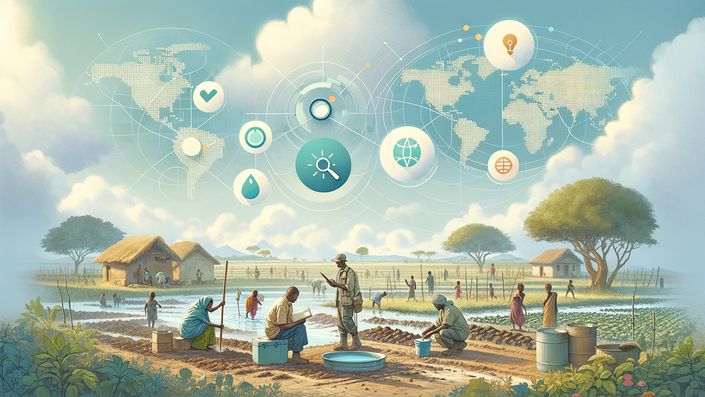
Let us illustrate the practical application of MEAL components in a real-world scenario. So here we have a project aimed at the prevention or the reduction of malaria in sub-Saharan Africa. 

The project was implemented in a rural community where malaria was a significant health concern, and the main goal was to reduce malarial incidents through two primary interventions. Firstly, the distribution of insecticide-treated mosquito nets, and secondly, through community education on malaria prevention.

Monitoring

Let us look at the monitoring component of MEAL. The first step was the distribution of mosquito nets to households. This activity aimed to ensure that every household received at least one insecticide-treated mosquito net. To track the distribution coverage, they conducted household surveys, and these surveys involved visiting each household to confirm receipt of the mosquito nets and gather data on distribution efficiency.

As a result of the monitoring efforts, they found that 90% of households in the targeted area received those mosquito nets, and this high coverage rate was crucial for the success of the intervention, as it meant that the majority of the population was protected.

Evaluation

The evaluation focused on assessing the impact of the intervention by comparing malaria incidence rates before and after the project. So, they utilized health facility records from community health workers to gather data on malaria cases, and by analyzing this data, they were able to measure the changes in the incidence over time. The evaluation revealed a significant reduction, I think it was 40%, of malaria cases within six months of the intervention. This substantial decrease demonstrated the effectiveness of distributing mosquito nets and conducting community education on malaria prevention.

Accountability

Ensuring accountability was a key aspect of the project. They held community feedback sessions to involve beneficiaries in this process. These sessions included focus group discussions and suggestion boxes placed in accessible locations. This allowed community members to voice their concerns, offer feedback, and to suggest improvements.

Through these accountability mechanisms, the project identified issues with net usage, such as improper installation or inconsistent use. They also pinpointed areas where additional education was needed, so this feedback was essential for refining the intervention.

Learning

The learning component involved reviewing and adapting the intervention strategies based on the feedback and monitoring data collected.

They conducted a thorough analysis of community feedback and monitoring data to identify areas for improvement. This continuing process allowed them to make informed adjustments to the project. One significant outcome was an increased focus on educating households about the proper usage of mosquito nets. This led to higher compliance and greater effectiveness of the intervention, further reducing the incidence of malaria.

Conclusion

This case study demonstrates how MEAL can be effectively integrated into a health intervention project. By systematically applying MEAL, the project achieved practical benefits and improved outcomes. The success of this project highlights the importance of a comprehensive MEAL approach in ensuring the effectiveness and sustainability of humanitarian and development interventions.

Each aspect of the MEAL framework played a key role in this health intervention. Monitoring ensured that 90% of households received the mosquito nets. Evaluation revealed this significant reduction in malaria cases in the first 6 months. Accountability was maintained through community feedback sessions helping identify issues and areas where more education was needed. Learning guided adjustments improved household compliance with mosquito net use, increasing the intervention’s overall effectiveness.

Reflection on MEAL

As we reflect on the key components of monitoring, evaluation, accountability and learning, let us take a moment to think about why each of these components is important in the humanitarian and development contexts. MEAL isn’t just a checklist; it is an essential part of ensuring that our projects are effective, that we are accountable to the communities we serve, and that we are constantly learning and improving.

Think about how these components—monitoring, evaluation, accountability and learning—are integral to your project success. How does each one contribute to better results? Maybe it’s the monitoring that keeps your project on track by providing real-time data. Perhaps it’s accountability mechanisms that ensure transparency and build trust with your communities. Or is it the learning element that helps your team improve with every project?

Take this reflection a step further. How can you apply or better apply the principles of MEAL to your work to ensure continuous improvement? How can you better incorporate stakeholder feedback and focus on achieving measurable outcomes? Think about how you could integrate MEAL at every stage, from initial planning right through to final evaluation.

Facing Real-World Challenges

Reflect on the real-world challenges. What challenges might you face in adopting MEAL in your specific context? Maybe you have limited resources. Perhaps you have encountered resistance to change within your organisation before. Yes, there will be challenges, but at the same time, think about the potential benefits: improved accountability, stronger project results, and a better understanding of what is working and what is not.

Ultimately, MEAL is about making your work more effective and impactful. It is a process that requires commitment, but the rewards are clear: better outcomes for the communities you serve and a stronger foundation for continuous improvement.

Key Takeaways: What MEAL Stands For

Let us recap the key takeaways and what MEAL really stands for:

  • Monitoring: Regular tracking of project activities and outputs to make sure everything stays on track.
  • Evaluation: Systematic assessment of whether the project has achieved its intended outcomes and made an impact.
  • Accountability: Ensuring transparency and responsiveness to stakeholders, especially the communities we serve. We can do this through community feedback mechanisms like suggestion boxes or focus group discussions—whatever it takes to give beneficiaries a voice in the project, allowing for course corrections when needed.
  • Learning: We draw lessons from our successes and challenges and then apply those insights to future projects.

MEAL is essential. It ensures that projects are effective, accountable, and adaptable. It enhances project effectiveness through systematic monitoring and evaluation. This means we can adjust and ensure that projects achieve their objectives. MEAL ensures accountability. Accountability mechanisms like community consultations and transparent reporting ensure that stakeholders are informed and involved, especially our beneficiaries. And it fosters continuous improvement, learning from both successes and challenges to help us refine strategies, making projects more effective and sustainable.

When we fully integrate MEAL, our projects become more adaptive, more responsive, and better capable of achieving lasting impacts for the communities we serve.


Product


Comments

Popular posts from this blog

Embracing Reflection, Learning, and Change: The Essence of Pause and Reflect Meetings

By Syed Younus Today, let's delve into a topic that's pivotal for adaptive management and continuous improvement: the "Pause and Reflect" meeting.  This approach isn't just another meeting format; it's a strategic practice rooted in intentional reflection, fostering learning and driving meaningful change.  Understanding 'Pause and Reflect' The term 'Pause and Reflect' originates from USAID's Collaborating, Learning, and Adapting (CLA) framework.  This framework emphasizes practices that enhance development effectiveness through strategic collaboration, continuous learning, and adaptive management.  Within this framework, 'Pause and Reflect' is a subcomponent under the 'Adapting' category.  It's essential to recognize that 'Pause and Reflect' isn't a specific meeting type; rather, it's an approach or mechanism—a way of doing things.  The Formal Definition According to USAID, 'Pause and Refl...

Syed Younus: Empowering Futures Through Career Counseling Since 2006

A Journey of Purpose – Introducing Syed Younus In the world of education and career guidance, few names shine as brightly as Syed Younus . With a vision rooted in service and empowerment, Syed Younus began his journey in 2006 with one simple goal — to help students find clarity in their career paths. What started as individual counseling sessions in local communities has now grown into a large-scale mission, reaching thousands of students across Telangana, Andhra Pradesh, and Karnataka . Through seminars, workshops, and personal mentoring, he has dedicated nearly two decades of his life to guiding young minds — particularly those from underserved and under-informed backgrounds — toward careers that match their interests, talents, and the realities of the job market. Creating Ripples of Change – Career Guidance Beyond the Classroom Syed Younus’ sessions are not limited to theoretical advice. They are deeply practical and rooted in experience. He has conducted hundreds of career awarene...

5 Common Reasons Why Projects Fail – With Examples and Tools to Overcome Them

5 Common Reasons Why Projects Fail – With Examples and Tools to Overcome Them Managing a project is no easy task. Whether you're overseeing a construction project, launching a product, or leading a software development initiative, there are numerous challenges that can derail progress. Understanding why projects fail is the first step toward improving your chances of success. In this article, we’ll explore five common reasons why projects fail , supported by real-life examples and effective tools and techniques you can use to avoid these pitfalls. 1. Poor Planning Explanation: Poor planning is one of the most common reasons behind failed projects. It refers to starting a project without a clear roadmap — including well-defined goals, realistic timelines, proper budget estimation, and resource allocation. Example: A software development team begins coding an application without finalizing its feature list. Midway through the project, the client requests major changes, caus...